Small Squad, Sharp Edge: Why UK Esports Needs Its Underdogs More Than Ever
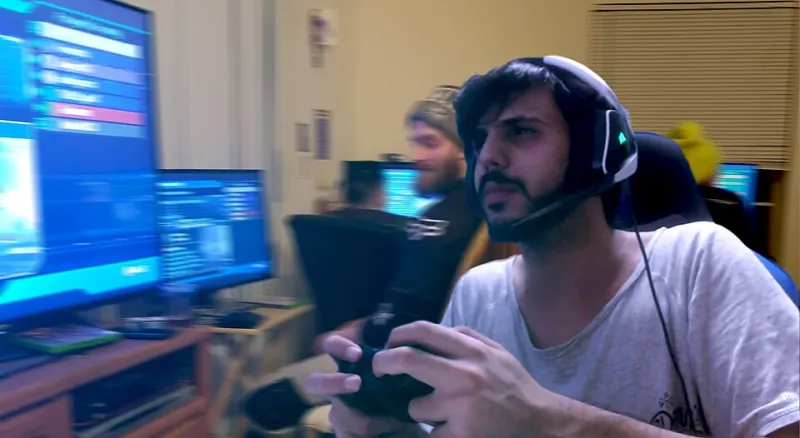
Photo: small esports team practicing together in a UK gaming room underdog squad, via i.pinimg.com
The UK esports conversation loves a big org reveal. New facility, new roster, new branding, a launch video with more smoke than a Bonfire Night display. Those stories matter, but they are not the whole scene. The real heartbeat is the underdog squad: the group of friends and grinders who book a room, scrim after work, review their own mistakes, and turn up to events with more hunger than budget. In 2026, UK competitive play needs those squads more than ever, and Anubis Team's blueprint is a useful case study in why.
The scene's real engine room
Underdog teams do the unglamorous work. They test unsigned players, they fill local brackets, they keep community servers alive, and they give newer competitors a realistic first step. A big org can inspire from a distance. A grassroots squad can invite you to a practice session on Tuesday and actually mean it.
That proximity matters in the UK. Our competitive scene is spread across cities, and travel is not cheap. A player in Leeds, Cardiff, or Newcastle might never get a trial with a London-based organisation, but they can find a local squad that scrims online, meets at a community venue, and enters regional events. Underdog teams shorten the distance between wanting to compete and actually doing it.
Anubis Team did not start with a sponsorship deck. It started with a group of players who wanted a sharper standard than the average pickup lobby. That is the underdog advantage: you can build the culture you want because you are not protecting a legacy. You can be honest about your level, pick your battles, and improve without pretending you are already a major player.
Practice with purpose, not just hours
The weakest argument in amateur esports is that more hours equal more progress. They do not. A squad that scrims for four hours without a review session is just a group of people getting tired together. The underdog blueprint has to be sharper than that.
At Anubis Team, the model is simple: short blocks, clear goals, and a review that names specifics. One session might focus on retakes. Another on map control. Another on comms discipline, with a rule that nobody calls a play unless they have information. The team records what went wrong and assigns one fix for the next session. It is not glamorous, but it creates a feedback loop that bigger orgs sometimes lose in the noise.
UK squads can copy this without a coach or a facility. Use a shared document, a Discord channel, and a timer. Ten minutes of warm-up, forty minutes of focused scrims, twenty minutes of review. Stop before everyone is fried. The aim is not to look busy. The aim is to leave with one thing you can do better next time.
Scout the overlooked
Underdog teams are natural scouts because they cannot afford to chase only polished players. They look at attitude, communication, and coachability. That is a competitive edge in a scene where plenty of talented players are overlooked because they do not have the right rank badge, the right follower count, or the right postcode.
A good scouting process is boring in the best way. Watch a player in a few games. Ask them to review a clip with you. See how they respond to a correction. Check whether they turn up on time and whether they blame the server every time something goes wrong. Mechanical skill can be developed. A team-first mindset is harder to teach.
This is where the underdog doctrine gets practical. UK esports does not just need more talent. It needs more teams willing to develop talent. A squad that gives an unproven player a structured trial, honest feedback, and a clear role is doing more for the scene than a roster that only recruits from the same small pool of names.
Mental resilience is a team stat
Every squad says it cares about mentality. Few build for it. Underdog teams feel pressure differently because every event can feel like a must-win. One bad bracket run and the group chat goes quiet. The blueprint has to include a way back from that.
Anubis Team's approach is to separate result from process. A loss is reviewed for decisions, not for blame. Players are allowed to say they are tilted, and the team has a default reset: water, a short break, a replay of one round, then back to the plan. It sounds small. It is the difference between a squad that improves after a bad night and a squad that quietly falls apart.
In 2026, UK competitive play is only getting denser. More events, more online cups, more players trying to break through. The teams that last will not be the ones with the loudest launch. They will be the ones that can lose on a Sunday, review on a Monday, and still want to scrim on Tuesday.
Community is a competitive advantage
Underdog squads are usually closer to their audience because they are part of it. They know the regulars in their Discord. They answer questions. They run community nights and local meetups. That is not just good vibes. It is a pipeline for players, volunteers, and organisers.
Anubis Team's local multiplayer nights are a good example. They give the squad a physical presence in the UK scene and turn spectators into participants. A community that feels welcome is more likely to produce the next trialist, the next bracket admin, or the next person who books the room when the original organiser is knackered. That is sustainability.
A blueprint for other squads
The underdog doctrine is not a sob story. It is a strategy. Practice with a purpose. Scout for attitude as well as aim. Treat mentality as part of the game. Build a community that can carry the team when results dip. Keep the rules clear and the welcome warm.
UK esports will always need its headline orgs. But the beating heart is the squad that started small and kept showing up. In 2026, the underdogs are not a side story. They are the pipeline, the proving ground, and the reason the scene keeps growing. Anubis Team's blueprint is not the only way to do it, but it is a reminder that you do not need a big budget to build a serious competitive culture. You need a standard, a schedule, and people who actually want to be there.